What to Wear at the Cliffs of Moher, and What to Leave Behind
The short answer. A rainproof jacket with a hood, shoes with grip, and layers rather than one warm coat. Leave the umbrella at the hotel — the attraction tells you to, and it is right. The temperature is not the problem here; the wind and the horizontal rain are.
Sixteen degrees in July sounds like a light jacket. On an exposed headland facing two thousand miles of open Atlantic it is not, and the gap between the forecast and the experience is the most common surprise people report on a Cliffs of Moher guided tour.
Why the umbrella advice is not fussiness
The Cliffs of Moher Experience specifically recommends a rainproof jacket and specifically says an umbrella is impractical. Anyone who has tried one on that path knows why: the wind comes up the face of the cliff and arrives vertically, so the rain is not falling past you, it is coming at you from below and from the side. An umbrella lasts about a minute and then becomes a liability near an edge.
A hood that stays up in wind is worth more here than the waterproof rating of the fabric.
The temperatures you are actually dressing for
| Season | Mean temperature | What it feels like on the path |
|---|---|---|
| Winter (Dec–Feb) | 6°C | Cold, wet and dark by five; gloves earn their place |
| Spring (Mar–May) | 7.5–12°C | The driest and sunniest months; still windy |
| Summer (Jun–Aug) | 14.5–16°C | Mild, bright and occasionally genuinely warm |
| Autumn (Sep–Nov) | 8–14°C | Warm enough, and the rain climbs again from October |
Met Éireann 1991–2020 averages for Shannon Airport, the nearest long-record station. The cliff top is windier and wetter.
The useful point is how little that column moves. Ten degrees separates the coldest month from the warmest. What separates a comfortable visit from a miserable one is not the month, it is whether your outer layer is windproof.
The layers, from the skin out
- A base layer you do not mind being damp. Cotton holds water and then holds cold; anything synthetic or wool does not.
- A warm middle layer. A fleece or a light down layer. This is the one you take off if the sun comes out, which it does.
- A windproof, waterproof outer with a hood. Non-negotiable. This is the piece that decides your day.
- Long trousers. Quick-drying rather than jeans, which stay wet for the rest of the afternoon.
- A hat that will not blow off, and gloves from October to April.
Shoes, and why they matter more than you expect
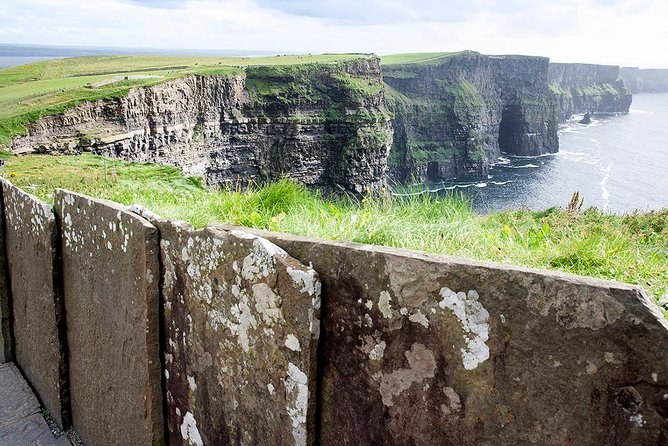
There are three and a half kilometres of paved path on the site, and paved does not mean dry. The flagstone is Liscannor stone — the same rock the cliffs are made of — and wet flagstone with a film of grit on it is slippery. Trainers with worn soles are the most common footwear mistake here.
If you are walking in from Doolin on the coastal trail, the requirement changes entirely: that is open cliff top, grass and mud, with uphill stretches, and it wants boots. Both guided walks ask for a moderate level of fitness and both mean it. The walking tours page sets out what each route involves.
What to carry, and what not to
- A small bag you can close. Anything loose on an open cliff top eventually leaves.
- Water and something to eat. Not one of the guided days here includes a meal in its fare. There is food at the visitor centre and more in Doolin.
- A phone strap or a wrist loop. The commonest thing people lose here is a phone held over a railing in a gust.
- Binoculars if you have them, for the seabirds on the stack and the puffin colony on Goat Island. The visitor centre lends them out as well.
- Not an umbrella. Worth saying twice.
Dressing for the coach as well as the cliff
On a Dublin day you are on a coach for six hours and outside for two. That changes the calculation: you want layers you can strip off in a warm bus rather than a single heavy coat you then have to hold. Several of the coaches have no bathroom on board and stop every couple of hours, which is worth factoring into what you drink on the way.
On a Galway day the drive is ninety minutes each way and the same principle applies more gently. How to get there sets out the road times from each direction.
Children, and the thing worth planning
Under-twelves get in free, up to four per adult, and the paved section is genuinely walkable for small legs. What is not is the wind, and a child in a thin coat will be finished long before the adults are. Some Dublin operators bar under-twos or under-threes from their coaches altogether, so check the listing before you book a family onto one.
If you get the weather wrong anyway
There is no weather refund, but there is a second chance. If fog spoils the view, the attraction lets a ticket be reused within twenty-four hours, and staff tell you the visibility as you arrive. On a guided day the equivalent is free cancellation up to twenty-four hours before departure, which almost every tour here carries — so a forecast that turns overnight is still something you can act on. The visitor information page has the rest of the practical detail.
Season by season, in one line each
- Winter. Gloves, a hat and a properly waterproof outer. The wind has nothing in its way from December to February and the light goes by five.
- Spring. The driest and sunniest stretch of the year, and still the season that catches people out: April can be bright and eight degrees at the same time.
- Summer. Layers, not a coat. Sixteen degrees and sunshine can turn into sixteen degrees and horizontal rain inside an hour, and then back again.
- Autumn. The warmest sea and the returning rain. September is mild and September is also when the swell starts making the boats unreliable.
What the visitor centre can lend you
Two things worth knowing before you over-pack. The centre lends binoculars, so there is no need to carry your own for the seabirds. It also lends wheelchairs at reception and runs electric mobility buggies up to the tower, which matters if someone in your party would otherwise skip the walk. Neither costs anything beyond your admission.
What it cannot lend you is a coat. There is indoor shelter inside the centre itself, and that is the only shelter on the site — once you are on the path there is nothing between you and the weather for the full eight hundred metres.
One sentence to take away
Dress as though it will be windier, wetter and colder than the forecast says, because on this headland it usually is — and then enjoy the fact that the weather is most of what makes the place look the way it does.
Dressed for it, the wind is the best part of the day. See the Cliffs of Moher tours that run in any weather.
Days that run whatever the sky does

Cliffs of Moher & the Burren Tour from Galway
The cheapest full coach day on this coast whose fare names the gate ticket, with ninety minutes on the cliff top and the Burren on the way.
From $64 per person
Check Availability
Cliffs Of Moher Hiking Tour from Doolin - Small Group
The cheapest way onto these cliffs: a guided climb up the coastal trail from Doolin, outside the paid area altogether.
From $40 per person
Check Availability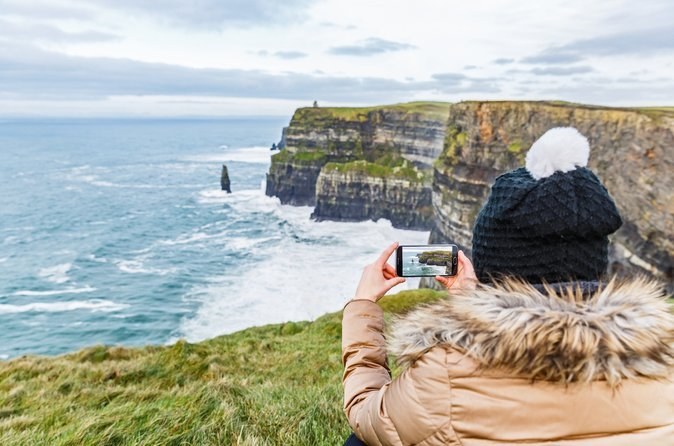
Dublin to Cliffs of Moher, including Wild Atlantic Way and Galway
The most-booked way to cross Ireland and back in a day, with two hours on the cliff top and every entrance fee in the fare.
From $88 per person
Check AvailabilityWhatever the sky is doing, Cliffs of Moher Tours says which days run regardless and which the weather can take.