The Cliffs of Moher From the Water: What the Cruise Shows You
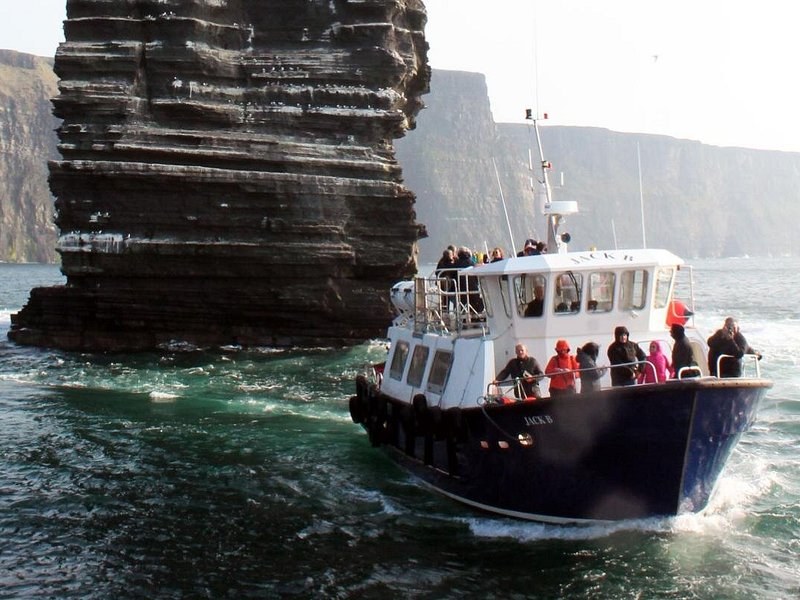
The short answer. The cruise sails along the base of the wall from Doolin and shows you the one thing the cliff top cannot: the scale. Nothing lands at the cliffs. Some boat days add a cliff-top stop afterwards and some do not, and that is the difference worth checking before you book.
There is a line travellers here keep repeating, and it is a good one: from the cliffs you see the sea, and from the sea you see the cliffs. Standing on top of a two-hundred-metre wall, the one thing you cannot see is the wall. That is the whole argument for putting a Ireland Cliffs of Moher tour on the water for an hour.
What the cruise actually is
The boats leave from Doolin Pier, six kilometres north of the visitor centre — see how to get there for where that sits — and run south along the foot of the cliffs before turning back. The crossing takes about an hour on the days that sell it as a sightseeing cruise, and less when it is folded into a ferry return from Inis Oírr.
You stay on the water throughout. There is no landing stage at the cliffs and there never has been: the base is boulder and swell, and the wall goes straight up out of it. Anyone selling you a boat trip "to" the Cliffs of Moher means alongside them.
What you see from down there that you cannot see from up here
- The bands. From the top, the shale and sandstone layers are edge-on. From the water they run across the face like courses of brickwork, and the alternation that makes the rock look striped in low light is suddenly obvious.
- The sea stack. On the cliff top it is a feature below you. From the boat it is a tower with birds on it, and the scale bar for everything behind it.
- The caves and the overhangs. The base is undercut in places and none of that is visible from above.
- The birds at eye level. Guillemots and razorbills nest on ledges you are looking down on from the path and level with from the deck; the facts page has the seabird calendar.
- The height, properly. Two hundred and fourteen metres is a number until there is a boat under it.
The catch: weather
Every cruise and every ferry on this coast is weather-dependent, and the listings say so in their own terms. A swell that is merely uncomfortable stops the boats outright, and the operators reserve the right to cancel or reroute.
A rough day cuts the visibility as well as the sailing. One traveller here describes water so rough it reduced the enjoyment of the cruise while the rest of the day stayed excellent. The answer is not to avoid the boats — it is to book a day that refunds in full up to twenty-four hours ahead, which almost all of them do, and to watch the forecast the night before. The weather page sets out which kinds of day the weather can cancel.
The three shapes of boat day
| Shape | What you get | Cliff-top stop? |
|---|---|---|
| Ferry to Inis Oírr, then the cliffs by road | Two hours on the island and an hour on top | Yes, with entry in the fare |
| Ferry out, cruise back, then the cliffs | The island, an hour under the wall and an hour on top | Yes, with entry in the fare |
| Island and cruise only | Two and a half hours on the island and the cliffs from the water | No |
The last of those three is the one to read carefully. It is a good day and a well-rated one, and it does not stand on the cliff top. If the photograph you have in your head is the one taken from O'Brien's Tower, that day will not give it to you.
Inis Oírr, which is most of what you are buying
Every boat day here goes to the same island: Inis Oírr, the smallest of the Aran Islands, fifteen to thirty minutes out of Doolin depending on the boat. None of them goes to Inis Mór, which is the big one and is reached from Ros a' Mhíl rather than from Clare.
What is on it: a grid of dry-stone walls on bare limestone, a sunken church, O'Brien's Castle on the high ground and the rusting hull of the Plassey on the shore. You get two to two and a half hours and you can hire a bike or a pony and trap at the pier. Those are the operators' own extras and sit outside every fare here.
Is the cruise worth the extra fare?
A ferry-and-cliffs day and a ferry-cruise-and-cliffs day are typically a few dollars apart, which makes this an easy call: if the sea is settled, take the cruise. The expensive version is the small-group cliffs-cruise day, which costs considerably more and buys you a twenty-five-seat coach and a longer island stop rather than a better boat.
The real cost is not money, it is time. An island day runs ten hours or more and gives you an hour on the cliff top. A straight Clare coach day runs eight and gives you two. The boat tours page puts the water days side by side, and the Galway page has the road ones.
What to bring on the boat
- A windproof layer. The deck is where the view is, and the Atlantic does not care that it is July.
- Something for motion sickness if you are prone to it. Several listings mention the swell.
- A strap for your camera or phone. It is windy, and you will be leaning.
- Shoes with grip for a wet deck and a wet pier.
Where the boats actually go, and what they pass
Doolin Pier sits at the northern end of the cliffs, so the cruise runs the length of them rather than nipping out to a viewpoint. Leaving the harbour you pass Doonagore Castle on the hill behind, and then the wall begins low and builds as you go south.
The high ground comes about two-thirds of the way down: the 214-metre section just north of O'Brien's Tower, with the tower itself a small square on the skyline from down there. The sea stack stands a little further on. On a clear run you can see the Aran Islands behind you the whole way, and in spring and early summer the ledges above are loud.
Can you do the cruise on its own?
Not on any of the days listed here — each pairs the cruise with the island, the coach from Galway, or both. Doolin's own operators sell standalone sailings from the pier, which is worth knowing if you are staying locally and simply want the hour on the water. What the guided days add is the transport from the city and, on most of them, the cliff-top ticket as well.
If you are already in Doolin, the sums change completely, and the walk up the coastal trail becomes the other half of the same question. The walking tours page covers that side of it.
The honest summary
The cruise is the best hour on this coast if the sea allows it, and it is the only way to understand the size of what you walked along the top of. It is also the first thing the weather takes. Book it with free cancellation, look at the forecast, and if it sails, stand outside.
The water days and the cliff-top days are different purchases. See which boat tours also stop on top.
Days that put you under the wall
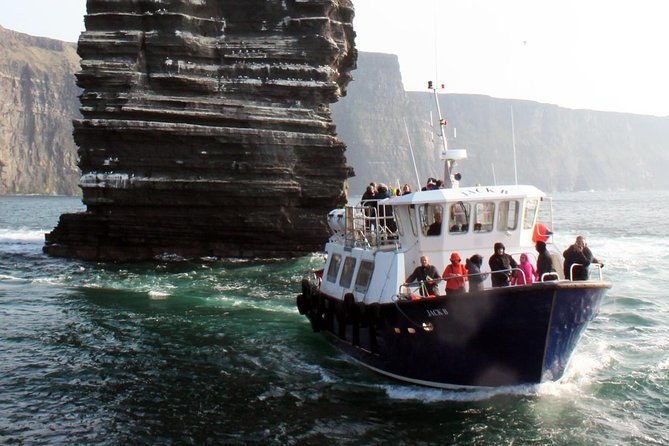
Galway to Aran Islands & Cliffs of Moher Day Tour & Cliffs Cruise
The cliffs from underneath and from on top in the same day, with the ferry, the cruise and the entry all in the fare.
From $99 per person
Check Availability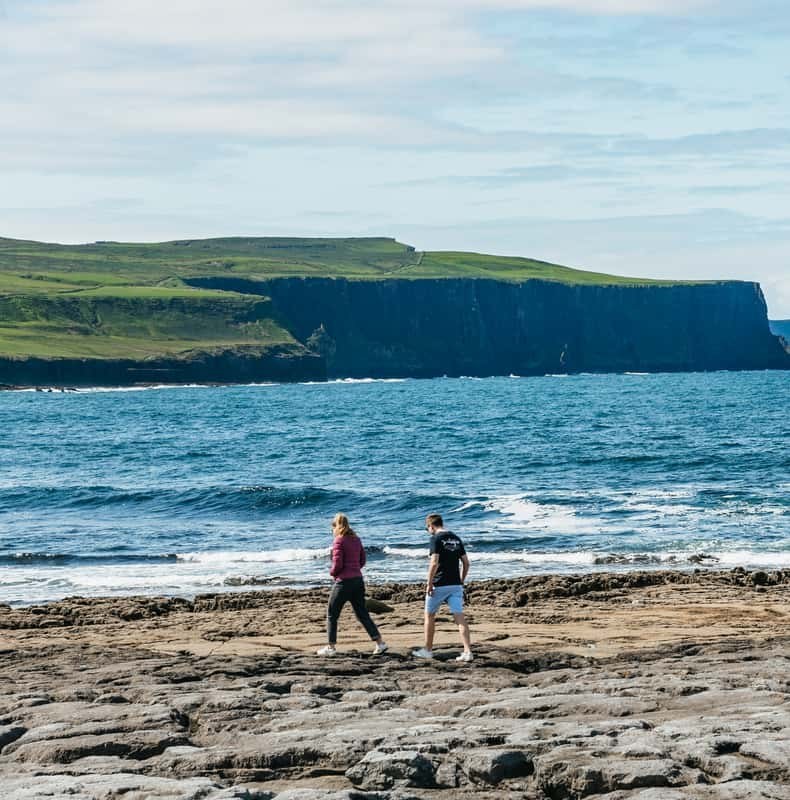
From Galway: Aran Islands & Cliffs of Moher Full-Day Trip
A full hour of cruising below the wall as well as an hour on the cliff top, with Atlantic Edge entry in the fare.
From $97 per person
Check Availability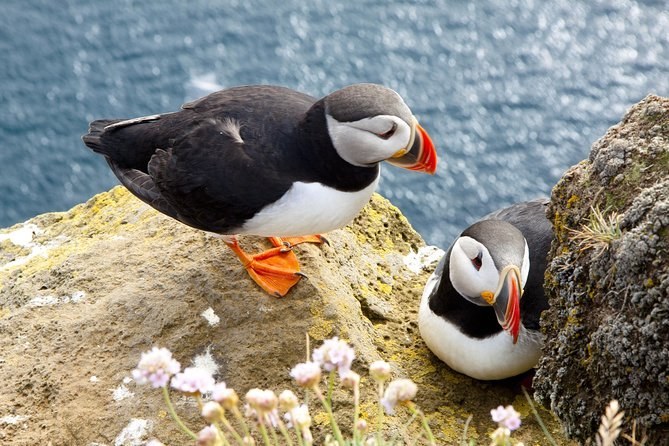
Small Group - Cliffs Cruise and Aran Islands in a Day from Galway
A twenty-five-seat day built around the island and the cruise, which sees the cliffs from the water and never stops on top.
From $153 per person
Check AvailabilityThe days that sail under the wall and the days that stand on top of it are listed together on Cliffs of Moher Tours.