The Best Time to Visit the Cliffs of Moher
The short version. May and June for the puffins, the sunshine and the long evenings. April for the driest month and the thinnest crowds of the good season. September if you want June's weather without June's coaches. And any month at all if you book a Cliffs of Moher booking you can cancel the night before, because the sky is the variable here and always will be.
There is no bad month to see these cliffs and no reliable one either. What changes across the year is not really the temperature — ten degrees separates January from July — but the daylight, the sunshine hours, the crowds and whether the boats are sailing. This guide takes those four in turn and then goes month by month.
What actually changes across the year?
Four things, and they do not all move together.
- Sunshine. Under two hours a day in December and January; nearly six in May.
- Rain. The driest month is April at 62mm; the wettest is December at 115mm.
- Daylight and opening hours. Nearer 9am–5pm in midwinter, as late as 9pm at the height of summer.
- Crowds. July and August on the path, and the 11am–4pm band in any month from May onwards.
When are the puffins there?
Late May to mid-July, with May and June the best of it. They winter at sea and come ashore only to nest, and the colony is on Goat Island, seen from the South Platform. Razorbills, guillemots, fulmars and kittiwakes are on the face for longer — the kittiwakes nest on the sea stack below O'Brien's Tower.
If the birds are why you are coming, the month decides the trip and the tour barely matters. The facts page has the full seabird calendar.
Which hour of the day matters more than the month?
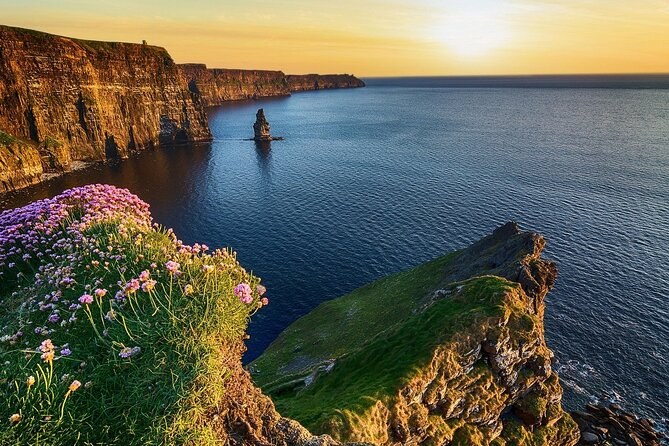
The afternoon, and it is not close. These cliffs face due west, so the sun is behind the wall all morning and on its face in the evening. The attraction charges most for arrivals between eleven and four and separately advises avoiding that window.
In June and July the site is open late enough to be there for the golden hour, which almost no coach tour uses. That is an argument for a car, a private day or the one midday departure — see sunrise and sunset at the cliffs.
What does the attraction's own pricing tell you?
That the middle of the day is the worst of it. Off-Peak AM runs 8 to 11, Peak runs 11 to 4, and Off-Peak PM runs 4 to closing, with up to 45% off peak advertised on the two cheaper bands. The busiest, dearest and flattest-lit hours are the same hours, in every month.
Month by month
| Month | Rain / sun | Crowds | Worth knowing |
|---|---|---|---|
| January | 104mm, 1.7h | None | Shortest hours; empty paths; cheapest bands |
| February | 87mm, 2.4h | None | Drier than January, still a winter visit |
| March | 76mm, 3.6h | Light | The turn; seabirds returning to the ledges |
| April | 62mm, 5.4h | Light | Driest month of the year, and long daylight |
| May | 63mm, 5.9h | Building | Sunniest month; puffins ashore from late in it |
| June | 70mm, 5.5h | Busy | Puffins at their best; the longest evenings |
| July | 76mm, 4.4h | Busiest | Warmest month; puffins gone by mid-month |
| August | 88mm, 4.6h | Busiest | Wetter than June; evenings still long |
| September | 77mm, 3.9h | Thinning | The quiet reward; swell returns for the boats |
| October | 96mm, 3.0h | Light | Superb autumn light when it arrives |
| November | 107mm, 2.1h | None | Dramatic and frequently invisible |
| December | 115mm, 1.5h | None | Wettest and darkest; closed 24–26 Dec |
Met Éireann 1991–2020 averages for Shannon Airport, the nearest long-record station. The cliff top is windier and wetter than the airport figures.
Is winter worth it?
For the right visitor, very much. The paths are empty, the online bands are at their cheapest all day, and an Atlantic gale against a two-hundred-metre wall is a spectacle in its own right. What you are trading is daylight — under two hours of sun a day in December, and a gate that closes around five.
The site closes only on 24, 25 and 26 December. Everything else runs, weather permitting.
What is spring like on the Burren?
April and May are the two months where the limestone inland from the cliffs comes into its own. The Burren's flowers grow in the fissures of the pavement, and almost every Galway coach day crosses it on the way. If you are choosing between two months and the cliffs look the same in both, the Burren is the tiebreaker.
When are the ferry and the cruise most reliable?
May to August, and the difference is real rather than marginal. Every crossing and every cruise here is weather-dependent by its own terms, and the swell that stops them picks up from September. Booking a boat day in October is not unreasonable — it is simply a booking you should be able to cancel.
Book the sea months with a refundable fare, and the winter months with one too. Almost every day trip here refunds in full up to twenty-four hours ahead, which turns a bad forecast into a decision rather than a loss. The multi-day tours are the exception, needing twenty-one days or six. The weather page sets out what each kind of day is exposed to.
When does the seasonal shuttle run?
The Burren & Cliffs Explorer is free and runs from 21 May to 20 September in 2026, around parts of North and West Clare. If you are visiting without a car outside those four months, a guided day is the practical answer rather than a preference — how to get there sets out every approach.
When do tours sell out?
The small ones, from May onwards. The guided walks cap at eight and fourteen travellers and the small-group boat day at twenty-five, and those go first in high season. The full-size coaches carry fifty to sixty-three and can usually be had at short notice even in July.
In winter, a day or two of notice is generally enough for anything.
What is high summer actually like?
Warm by local standards, busy, and longer than you expect. July averages sixteen degrees and is the warmest month; August is a degree behind and twelve millimetres wetter. Both bring the fullest car park and the busiest eight hundred metres of path on the site, concentrated squarely in the 11am–4pm band.
The compensation is the daylight. At the height of summer the gate stays open until around nine, and the sun on this coast does not set until after that — so an evening visit in July is a genuinely different experience from the same visit at noon, on the same ticket and in a cheaper band. Almost no coach tour uses those hours, which is exactly why they are quiet.
If you are visiting in July or August and can choose your hour, choose the last one. If you cannot, choose the first: the path before eleven is a fraction of the path at two.
What about the shoulder months?
April and September are the two months this coast rewards most and markets least.
April is the driest month of the year at 62mm across only eleven wet days, with five and a half hours of sun and daylight already long. The Burren is coming into flower and the coaches are not yet full. What it lacks is puffins, which do not come ashore until the end of May.
September still averages fourteen degrees and four hours of sun a day, and the crowds fall away from the first week of it. The cost is at sea: the swell that cancels ferries and cliff cruises builds through the month, so a boat day in September wants a fare you can move. October keeps the light and loses the reliability entirely.
So what is the best month?
May, on balance: the sunniest month of the year here, dry by local standards, puffins ashore from late in it, long evenings, and the crowds not yet at their peak. April is the value answer and September is the quiet one. July and August are the months to visit early or late in the day rather than not to visit at all.
Frequently asked questions
What is the best month to visit the Cliffs of Moher?
When can you see puffins at the Cliffs of Moher?
Is the Cliffs of Moher worth visiting in winter?
Does the Cliffs of Moher ever close?
What time of day is best?
When is the boat trip most reliable?
Whichever month you land on, the fares are compared side by side on Cliffs of Moher Tours.
Three days for three different months
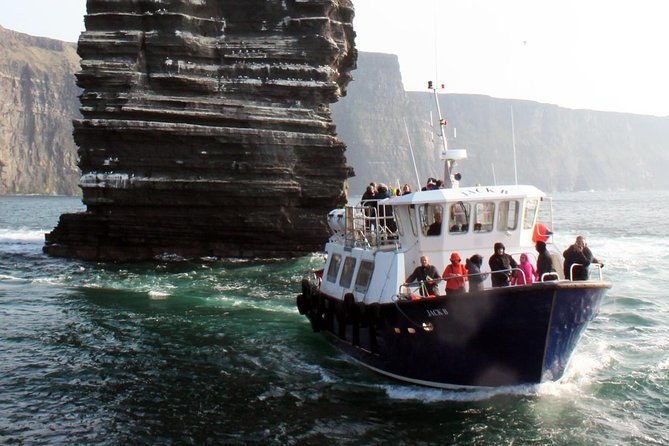
Galway to Aran Islands & Cliffs of Moher Day Tour & Cliffs Cruise
The cliffs from underneath and from on top in the same day, with the ferry, the cruise and the entry all in the fare.
From $99 per person
Check Availability
Cliffs of Moher Hiking Tour from Galway - Small Group
Four hours walking the cliff path in a group of eight, with the visitor centre entry paid and two hours in Doolin at the end.
From $104 per person
Check Availability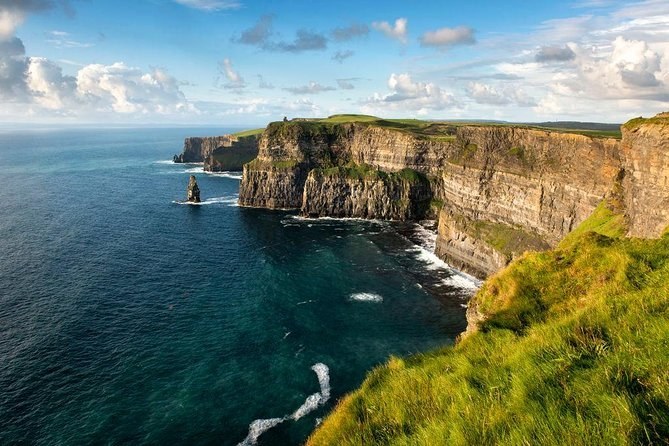
Dublin to Cliffs of Moher, Burren, Wild Atlantic Way, Galway Tour
The Dublin day that writes a minimum two-hour cliff-top stay into its own fare, with the Visitor Experience paid.
From $91 per person
Check Availability